Issue 23 · Authority boundary
A Parametric Trigger Is Fast Because It Does Not Decide the Loss
Event technology can verify a weather or cancellation trigger quickly, but an index payout is not a compressed indemnity adjustment. The programme must decide whether speed is worth the deliberate choice not to measure the insured's exact loss.
One system
event insurance
The other
parametric insurance
Event cancellation insurance and parametric weather cover meet when an objectively measurable disruption has uncertain financial consequences for the organiser.
A parametric trigger is fast because it declines to answer the question an indemnity policy spends most of its life answering: how much was actually lost?
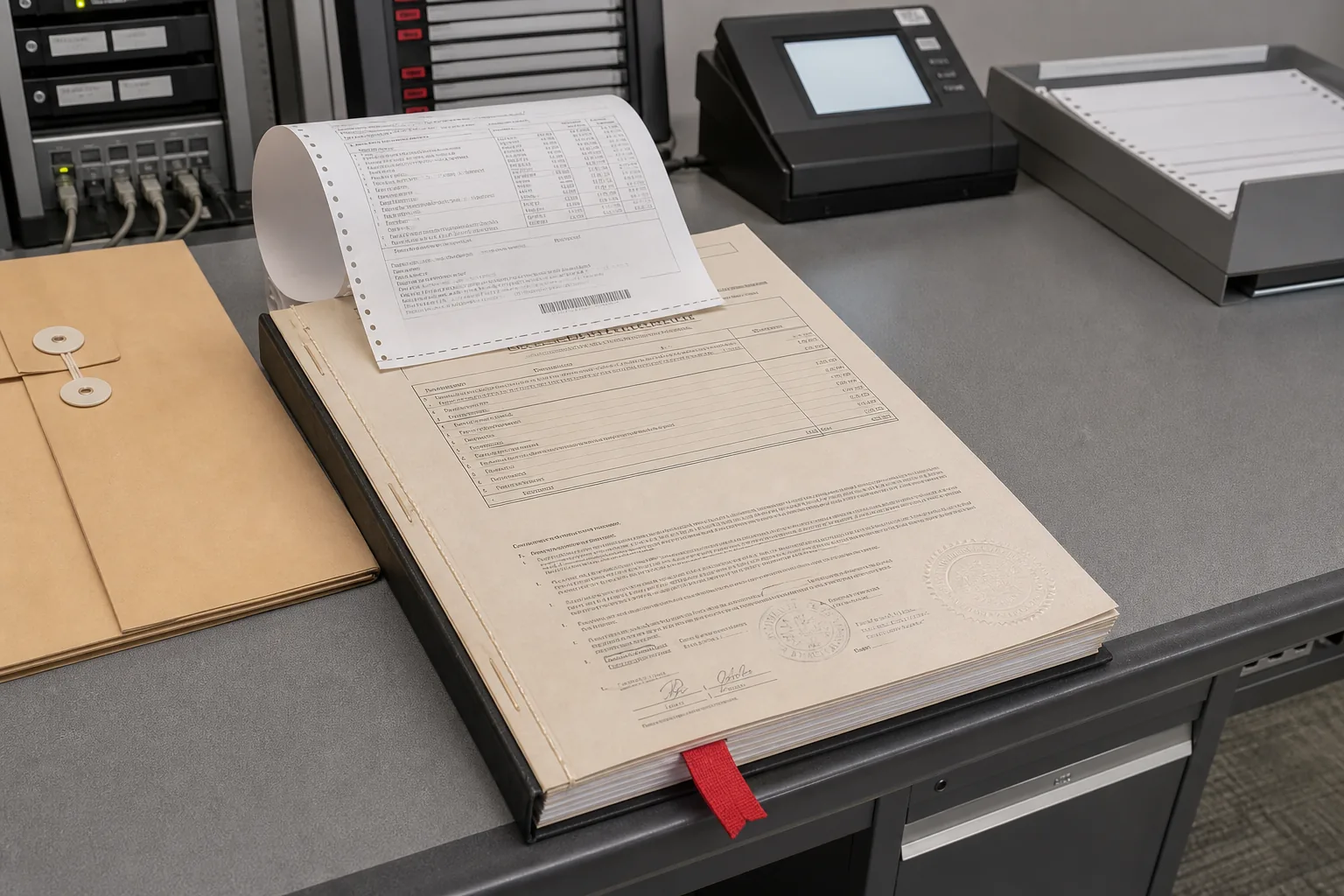
The attractive thing about a parametric trigger is that it seems to make a decision disappear. Rainfall passes a threshold at a named Environment and Climate Change Canada station.
A calculation agent reads the record.
A payment is due.
That is genuinely useful.
It is also a different promise from the one we sell as event cancellation.
A parametric trigger is fast because it declines to answer what an indemnity policy spends its life answering. How much was actually lost?
Our technology verifies a signal quickly.
It can’t make the signal equal the loss.
The organiser and we decide whether that is acceptable at binding. Not when the field is flooded and the phones have started.
Because event disruption isn’t one thing.
Cancellation happens before the gates open.
Abandonment happens after an event has begun and then stops.
A named artist may fail to appear.
Weather can force an evacuation, end a day early, or just thin the crowd. Commercial general liability is another path again when somebody is injured. An interface putting all of that under one button marked “claim” has achieved visual consistency.
It has not achieved operational clarity.
The slow question is the whole point of indemnity
Take the ordinary cancellation and abandonment path.
A typical form responds where the organiser is compelled to cancel, abandon, postpone, curtail, or relocate for a cause beyond its control.
One it could not reasonably have prevented.
That distinction earns its keep.
A commercially prudent decision to stop an event isn’t automatically a covered decision if the event could physically have gone ahead. The claim becomes an accounting exercise with contractual consequences. Net ascertained loss is irrecoverable expenses incurred and committed, plus insured lost net profit, less expenses saved and amounts recovered elsewhere.
The sum insured is our ceiling.
It is not a cheque with a polite label. At a two-day Ontario festival in the corpus, lightning inside the promoter’s stated radius led the site safety officer to suspend the stage.
A municipal official concurred.
The organiser cleared the site, then abandoned the second day when no window remained before curfew.
Those facts mattered.
So did the time-stamped radio log, the written recommendation, the warning screenshots, and the mitigation that followed. The cancellation policy had to ask what the organiser owed anyway under pay-or-play artist contracts. What it saved by standing down a security shift.
What ticket refunds it issued.
What sponsor revenue it kept or deferred.
The stage supplier’s cancellation credit was not a footnote.
It changed the loss.
It is not a deficiency in the claims process. It is the work we were paid to do. Our adjuster is deciding the financial consequence of a disrupted promise.
Not merely confirming that the weather happened.
An all-risks-with-exclusions form also allocates the argument differently from a named-perils form. Under the first, the insured establishes a fortuitous loss within scope and we bring an exclusion. Under the second, common in some weather arrangements, the insured establishes that the named peril occurred.
The claim path starts with a coverage architecture.
Not with a dashboard state.
The fast question is deliberately narrower
A parametric weather contract asks us something smaller.
Did the named index meet the specified condition, in the specified place, in the specified window? For an event, the wording can name a station, a clock window, and a rainfall threshold. It can use sustained wind or temperature instead, with a named third-party dataset.
It might be binary, stepped, or linear.
Binary means the threshold produces the full limit.
Stepped means the contract maps bands to percentages.
Linear means the payout grows between attachment and exhaustion.
None of those is a calculation detail.
Payout function, rounding rule, currency, FX fixing date, per-event and aggregate limits, number of covered events, reinstatement treatment. Those are the rules our adjuster would otherwise work through after the fact.
The corpus gives us the contrast.
The same festival carried a parametric weather contract with a $150,000 limit, payable when rainfall passed its threshold in a six-hour window at a named station.
It paid on the record alone.
No adjuster. No proof of quantified loss. No deductible.
Funds could arrive within weeks of publication.
That payment is exactly what an organiser needs when deposits, suppliers, and payroll all arrive before a long cancellation adjustment finishes.
It competes on date, not on quantum.
But it also tells us what the contract won’t do. Lightning can clear a site while rainfall never crosses the index. A storm cell can close the event and miss the observing station. The index can cross the threshold on a day the programme runs beautifully.
None of those is a system error.
They are basis risk.
The trigger is our decision to stop measuring.
So we choose it before the event rather than explain it afterwards.
One intake, two authorities, and the split has to be real
There is a predictable implementation mistake waiting here.
We add a parametric rider, route it through the same notice flow as cancellation cover, and make the whole thing look like a shorter claim. The result can be tidy and still be wrong.
Notice should be prompt on both paths.
Contingency wordings commonly require immediate notification, then written particulars within a short fixed period. Parametric contracts have a notice period too, measured in days rather than the months a conventional proof of loss allows.
One intake service can capture the event record once.
The authority after intake has to split.
The indemnity path needs the circumstances, invoices, ledger evidence, artist and supplier contracts, refund records, mitigation decisions, and probably an adjuster and a forensic accountant.
The parametric path needs the governing data, the calculation agent’s determination, and the objection route.
Even “automatic” needs handling.
Commercial parametric cover commonly requires a signed statement that the insured held an insurable interest and suffered a loss at least equal to the payout.
It is a declaration rather than a full adjustment.
It still matters.
It helps preserve insurance characterisation, and it usually caps our payment at actual loss.
Which produces an awkward asymmetry worth stating plainly.
The organiser can suffer a loss larger than the index payment and keep the shortfall.
It can’t ordinarily keep an index payment larger than its actual loss.
The upside of basis risk is removed and the downside stays.
The accounting classification is not cosmetic either.
IFRS 17 applies where a contract transfers significant insurance risk.
A contract paying purely on an index without that transfer is a derivative under IFRS 9.
Nobody should discover that boundary while preparing the first close.
The Canadian event answers to several rulebooks at once
Canadian event cover doesn’t become Canadian because we put a maple leaf on a weather screen.
The specialty placement is often a subscription wording in the Lloyd’s and London company market.
A lead underwriter agrees manuscript terms and following markets subscribe.
Commercial specialty wordings aren’t filed for approval the way personal auto rates and forms are.
So two festivals in the same city can hold materially different cancellation terms.
We cannot infer the applicable rule from a product label.
We need the bound wording, the schedule, the endorsements, the subjectivities, and evidence that cover attached.
This is also where communicable disease needs uncomfortable precision.
Since 2020, absolute exclusions drawn from Lloyd’s Market Association model wordings have been applied widely to event cancellation.
A public-health order can make cancellation necessary without making it covered.
A buy-back, where available, is separately underwritten, often sub-limited, sometimes restricted to a named venue or a specified closure order.
Non-appearance is separate again.
Named-artist cover commonly requires a medical questionnaire, and a disclosed condition can be excluded going forward.
In the festival case the headliner declined the questionnaire, so cover attached only for two support acts.
A workflow reading “artist cancelled” and assuming the main policy responds has not found efficiency.
It has thrown away our coverage decision.
Provincial control reaches our placement even where it doesn’t prescribe the wording.
Insurers need authorisation through OSFI federally, or through provincial bodies like FSRA and the AMF.
Ontario brokers are separately licensed through RIBO.
London capacity may come through a Canadian-licensed fronting arrangement or a Lloyd’s Canada entity.
A direct placement with an unauthorised insurer can attract federal excise tax and provincial charges, borne by the buyer.
No reason to make the process slower.
It is a reason not to let a fast payment signal impersonate a complete coverage decision.
Rehearse the disagreement while everybody is still calm
The design review worth running is not a demonstration of how fast the feed updates.
It is a rehearsal of the cases where the organiser loses and the trigger doesn’t fire.
And the cases where the trigger pays and the ledger never moves.
Start with the spatial case.
The named station records conditions below threshold while the site gets hit.
Then the metric case.
Lightning creates the safety event and rainfall is a poor proxy for it.
Then the temporal case.
The worst conditions land outside the agreed measurement window.
Then the payout-design case.
A result just below a step produces nothing, or something sharply smaller.
The named-storm corpus makes that last one harsh.
A cat-in-a-box contract can use a polygon and central pressure at closest approach.
A storm five kilometres outside the box pays nothing.
A 941 hPa result can pay differently from 940 hPa, because stepped triggers are cliffs, not slopes.
Real-time National Hurricane Center advisories support faster settlement.
A later Tropical Cyclone Report can revise the record.
We choose whether the contract takes the advisory or waits for the final report.
Weather data can fail too.
An index cessation clause names a fallback source, or gives the calculation agent authority to determine the value in good faith and in a commercially reasonable manner.
Without one, our product is most uncertain exactly where its simplicity was supposed to help.
I would keep these cases in an implementation test pack, beside the ordinary cancellation examples.
The test is not whether somebody can file a notice in few clicks.
It is whether we can show, event by event, which authority decided the payment.
Measured signal. Loss adjustment. Or a coverage exclusion.
Two promises, and they are not service levels of one another
Leadership should be offered two operating promises.
The first is speed on a defined signal.
It needs data provenance, trigger wording, source versioning, a calculation agent, a payout table, an attestation process where required, exception handling, and honest basis-risk disclosure.
The second is indemnity on demonstrated loss.
It needs defensible wording, prompt notice, records of the operational decision, mitigation evidence, contract and refund analysis, adjustment capacity, and patience with a result that is slow because it is measuring a consequence.
Either promise can be right.
We should not present them as one promise at two service levels.
So we keep the parametric layer visibly separate, even where the journey is shared.
Give it our different decision record.
Show the named source and the clock.
Show the payout schedule.
Show the basis-risk scenarios we retained.
Pair it with indemnity where the organiser cannot carry that risk alone.
Fast insurance is not insurance that learned to decide the loss more efficiently.
It is insurance that decided, in advance, not to decide it at all.
What the issue establishes
- distinguish cancellation, abandonment, weather, and non-appearance claim paths
- identify the communicable-disease exclusion as a separate coverage boundary
- define an index source, named station, measurement window, and payout schedule before binding
- separate a parametric payout from an indemnity calculation of net ascertained loss
- identify spatial, metric, temporal, and design basis-risk scenarios for an event organiser
- retain notice, attestation, calculation-agent determination, and objection controls for a parametric payout
The unfashionable recommendation
Do not place a parametric rider behind the same claim interface and call it simpler insurance; preserve the trigger's separate authority and disclose the basis risk it retains.
Asked in the meeting
- What makes a parametric event policy pay quickly?
- A parametric event policy pays quickly because a calculation agent applies a pre-agreed payout function to a named external measurement instead of adjusting the organiser's expenses, refunds, saved costs, and lost profit. The contract fixes the index source, station or area, measurement window, trigger, and payment schedule before the event. The speed comes from removing loss measurement, not from accelerating it.
- Is a parametric weather payout the same as an event cancellation claim?
- No. Event cancellation and abandonment cover ordinarily pays an ascertained net loss: irrecoverable incurred and committed costs plus insured lost profit or revenue, less saved expenses and amounts recovered elsewhere. A parametric weather contract pays the amount assigned to its measured index. The same storm can create a large indemnity claim and no parametric payment, or a parametric payment and little financial loss.
- What has to be decided before a weather trigger is bound?
- The wording identifies the index, reporting agency, observing station or geographic area, measurement window, trigger threshold, payout form, limit, and treatment of data revisions or disruption. For Canadian event weather cover, the measurement commonly refers to a named Environment and Climate Change Canada station or another named dataset. These are contract decisions made before the event, because they determine whether the payment condition has occurred.
- Can a festival be rained out and still receive no parametric payment?
- Yes. A parametric contract can pay only if its named measurement satisfies the trigger. A rain cell can disrupt an event while missing the named station, or lightning can require a site evacuation while rainfall at that station remains below the agreed threshold. The event may still have an indemnity claim if its cancellation wording responds, but the index contract does not substitute a loss assessment.
- Can a parametric policy pay when the event did not lose money?
- The index can be met even when the organiser's financial consequence is small, which is one form of basis risk. Commercial parametric insurance commonly controls that outcome through a proof-of-loss attestation: the insured declares an insurable interest and a loss at least equal to the payout. Where the actual loss is smaller, the payment is commonly reduced to that loss without conducting a full adjustment.
- What is the difference between cancellation and abandonment?
- Cancellation occurs before an event begins. Abandonment occurs after it has started and is then stopped part-way through. Both may fall within an event cancellation wording where the organiser is compelled to cancel, abandon, postpone, curtail, or relocate for a cause beyond its control that could not reasonably have been prevented. The documents and mitigation actions at the time of the decision matter to either path.
- Does a headliner illness automatically trigger event insurance?
- No. Named-artist non-appearance is ordinarily a separate insuring agreement from cancellation and adverse weather. It commonly requires a completed medical questionnaire for the artist, and disclosed or pre-existing conditions can be excluded unless specifically addressed. If the named performer is not covered, or the claim traces to an undeclared condition, an event cancellation policy does not become non-appearance cover after the illness occurs.
- What happens if a public-health order shuts down an event?
- A public-health order may make cancellation necessary, but necessity does not override an exclusion. Since 2020, communicable-disease exclusions drawn from Lloyd's Market Association model wordings have been widely applied to event cancellation risks. Any available buy-back is separately underwritten and may be sub-limited or confined to a named venue or specified closure order. The actual placement wording decides the result.
- Does parametric insurance have a claims process?
- Yes, but it does not have a conventional loss-adjustment process. The insured gives notice within the contractual period, provides any required attestation, and the named calculation agent reads the governing data and applies the payout table. The agent issues a determination notice, and the parties may have a short objection period. There is no scope-of-repair negotiation or reconstruction of every refund, invoice, and saved expense.
- Why does the data source matter more than the claims screen?
- The data source is part of the payment obligation. A parametric wording names the reporting agency, publication version, spatial definition, measurement window, and fallback if the source fails. Reanalysis and satellite data can be revised, so the contract also states whether it uses an initial publication or a restated value. A claim interface can display a result, but it cannot repair an undefined source or an ambiguous measurement rule.
- What is basis risk for an event organiser?
- Basis risk is the difference between the index payout and the organiser's actual loss. It can be spatial, when the event and the named station experience different weather; metric, when rainfall does not represent lightning or wind; temporal, when disruption falls outside the measurement window; or structural, when a payout step creates a sharp result near a threshold. It is designed into the contract before the event.
- How should an organiser use parametric cover with cancellation insurance?
- An organiser can use parametric cover as a liquidity layer alongside indemnity cancellation insurance, rather than as an unqualified replacement. The parametric payment supplies defined funds after a defined signal; the cancellation policy adjusts the actual net loss subject to its wording, limit, deductible, exclusions, and mitigation requirements. Sizing the parametric layer against a retained loss is one way to keep an index shortfall from becoming an uninsured loss.