Issue 13 · Economics over fashion
Condo Deductible Chargebacks Turn a Simple Portal into a Coverage System
A condo portal that treats a deductible chargeback as a billing event misses the allocation of responsibility beneath it. The workflow needs to hold the corporation policy, unit-owner cover, standard-unit definition, and applicable limit together.
One system
condo insurance
The other
deductibles limits
The condominium corporation property policy and the unit-owner policy meet when a corporation charges its deductible to an owner and the owner-side coverage must determine whether, and to what limit, it responds.
The chargeback notice looks like an invoice, but it is often the first document in a coverage dispute.
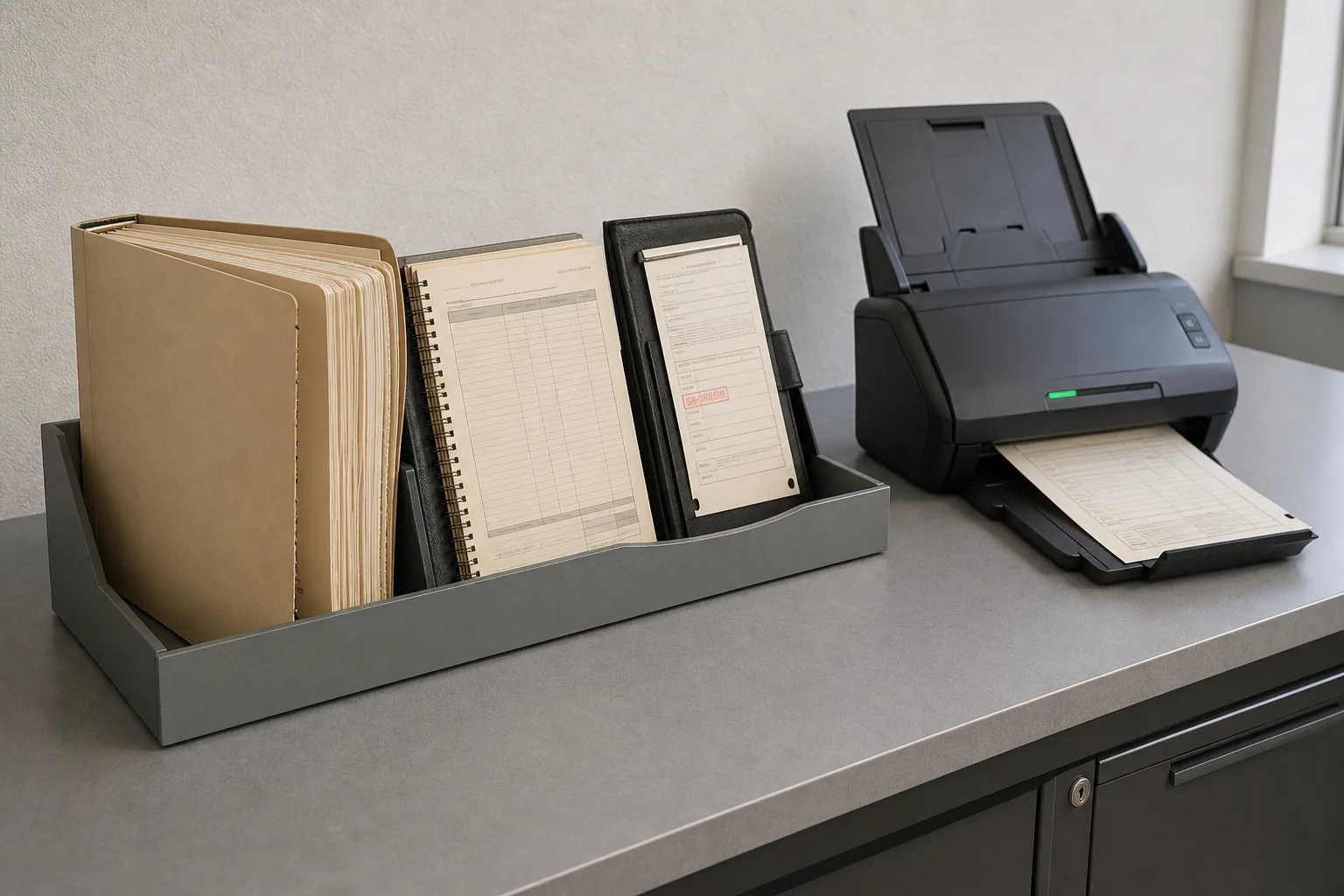
A condominium deductible chargeback has the visual grammar of an invoice. A portal shows an amount, a due date, and a button before lunch. None of that says whether we allocated the loss correctly. None tells the owner whether their policy answers.
The notice is not the end of a billing process. It is often the first document in a coverage dispute.
The demand arrives after several decisions have been made.
Usually outside the system that sends it.
The corporation decided what was damaged.
Somebody split standard unit from improvement.
Our adjuster scoped the loss.
The corporation picked a route for its deductible.
The owner policy may respond, through a separate endorsement, with a separate limit, sometimes with a liability condition. Put a payment button on top of that and we have not simplified the work.
We hid it until somebody refuses to pay.
The faster our notice arrives, the more carefully we have to know what we are asking the owner to bear.
The invoice is the last layer, not the first
The Ontario source case is usefully ordinary.
A dishwasher supply hose fails in unit 1408 of a Toronto tower at 9:40 p.m.
At 11:15, unit 1108 reports, three floors down.
Staff shut a riser serving eleven floors, and a restoration contractor is dispatched.
That is not merely scene-setting.
Clean supply-line water is Category 1.
It becomes Category 2 once it picks up contaminants from carpet and drywall, within a day or three. So the manager’s decision to spend, the authority under the management agreement, and the authorisation signed that night all move the eventual amount.
All long before a chargeback record exists.
By Monday we have a corporation claim and several owner claims. The corporation policy covers common elements and units to standard condition.
Each unit-owner package covers the residue.
Contents. Improvements and betterments. Living expenses. Personal liability. And, where bought, assessment coverage.
That is the first control a portal respects.
The corporation claim isn’t a proxy for an owner claim. A claim number on one side proves nothing on the other. The familiar shorthand says the corporation covers the building and the owner covers the contents.
Concise, memorable, wrong where it matters.
Ontario’s Condominium Act, 1998 makes the corporation insure on its own behalf and the owners’, for units and common elements, at replacement cost, against the enumerated major perils.
The exclusions are contents, improvements, and betterments.
The actual boundary is the standard unit definition.
Standard unit is an allocation rule wearing a finish schedule
In the source case, unit 1308 has wet drywall, base trim, and flooring across 340 square feet. The standard-unit by-law names builder-grade broadloom, sheet vinyl in kitchens, primed drywall with one finish coat, MDF base, a specified vanity.
It excludes installations after closing.
That list is not construction trivia to us.
It splits one wet floor between two of our policies.
The corporation policy pays the standard broadloom cost.
Engineered hardwood laid in 2019 is an improvement, and the owner policy pays the difference up to its limit. A sofa and a rug sit on the owner side. Four weeks of hotel is living expense, owner side again. The definition can come from a registered by-law, passed by the board and confirmed by a majority of owners. Or from the declarant’s schedule, where no by-law exists.
It can define different classes of unit.
A national rule with a tidy list of “owner responsibilities” fails where the loss happens. I would keep the component schedule in the record we work from.
Not behind a link labelled documents.
A restoration contractor can apply a named schedule on a Saturday. An as-built reference sends somebody hunting plans while material rots. The system says which definition applies, what version it holds, and which estimate lines fall inside.
It should also avoid a common category error.
Maintenance responsibility does not follow the insurance boundary.
An owner can maintain a component the corporation insures.
The portal cannot infer “improvement” from “owner maintenance.”
The deductible is a corporate exposure before it is an owner demand
The corporation-side loss is $78,400.
Drying, restoration, four units to standard, corridors, lobby, an elevator call.
The corporation’s water-damage deductible is $100,000.
We pay nothing, and operating cash funds the loss.
That does not make this an accounts-receivable problem.
Separate water deductibles run high on Ontario residential towers. A claim below the deductible still enters our loss history, indemnity or not. At renewal four months later, the deductible rises to $150,000.
The corporation’s retained exposure changes.
Every owner-side limit that was adequate can stop being adequate, with no change to the unit-owner policy. Ontario lets the corporation add the amount to an owner’s common expenses once the statutory trigger is met. The cap is the lesser of repair cost and deductible. On these facts $78,400 is less than $100,000, so that is what the corporation seeks from unit 1408.
But the system needs more than the arithmetic.
Under the statutory branch, the damage comes from an act or omission of an owner or occupant.
Practitioners dispute how that applies.
A registered indemnity by-law can extend that to any loss originating in the unit, fault or not.
Many modern declarations take that route.
The portal needs a state better than “payable.”
It needs jurisdiction, loss origin, statutory route, by-law version, repair cost, deductible in force, and whether the amount reached common expenses.
Without those, nobody can explain why a hose failure became a debt attached to one unit.
Loss assessment is not the answer to every assessment
The most expensive error here is linguistic.
“Assessment” sounds like a category of coverage.
It is not one category for us.
Deductible assessment coverage answers an amount charged to an owner because of the corporation deductible.
It has its own limit.
Standard-form limits run $25,000 or $50,000, more by endorsement.
Loss assessment coverage answers something else.
An owner’s share of an assessment on all owners, where a loss exceeds the corporation limit or falls outside its policy.
One unit charged $78,400 because its supply line failed is not an all-owner assessment.
Loss assessment doesn’t answer the chargeback because the names rhyme.
The gap we leave is concrete.
At a $25,000 limit, the owner recovers $25,000 and owes $53,400.
That is a limit doing exactly what it says.
Not a portal exception, not a payment-plan problem, not a missing document.
There is a sharper problem underneath.
Some owner wordings respond only where the owner is liable.
A no-fault chargeback under an indemnity by-law can be enforceable and outside that condition.
Corporation and owner’s insurer are both reading their contracts correctly.
The owner is standing in the seam.
No automation should improvise across that seam.
AI reads a declaration, extracts a deductible, compares a standard-unit schedule against an estimate, flags a liability condition.
It shouldn’t determine that a chargeback is covered.
That answer rests on statute, registered instruments, wording, loss facts, and limit.
Fluent confidence will not repair a coverage gap.
Build the allocation record before the payment flow
We needn’t build a claims-adjusting engine.
It needs an allocation record keeping the questions out of one balance.
The corporation side holds the deductible in force, the loss scope, the standard-unit definition, the by-law, the statutory basis, the repair cost, the calculation, the common-expense status.
The owner side holds the notice, the policy and endorsement evidence, the assessment wording, its limit, and the reason for any referral.
“Policy supplied” is not a coverage determination.
“Limit shown” is not a payment approval.
A limit caps a specified promise.
It doesn’t promise every matching charge sits inside it.
Sublimits exist because a headline amount narrows for particular exposures.
Same reason a property programme advertises a big headline limit and carries smaller ones for flood.
The operative limit follows the coverage invoked.
So we route five cases early.
An unclear standard-unit item. An uncertain loss origin. A dispute over the trigger. An owner wording that seems to need liability. An owner limit below the demand.
Those are allocation cases, not collection cases.
Asking collections to resolve them by collecting buys us complaints later.
There is a hard collection mechanism, and it belongs at the end of that path.
Once a charge reaches common expenses, the lien process applies.
The corporation notifies owner and mortgagee, and registers the lien within three months of default.
The lien takes priority over most registered encumbrances.
A mortgage lender commonly pays it to protect its position and adds the amount to the loan.
An excellent reason to fix the allocation record before the notice goes self-service.
Mandatory mediation and then arbitration is an expensive way to learn the portal never kept the by-law.
Surface the contested allocation before it becomes a collections file
The board asks whether the portal cuts arrears, calls, and handling.
We should arrive with a more exact question.
Does the workflow identify a contested allocation before a valid debt becomes a coverage and collections dispute?
The economic case here is not grand transformation.
It is avoiding the cost of reversing an avoidable charge after we told an owner it was settled.
A component schedule. A by-law version. A deductible date. A loss-origin record. An endorsement limit.
Modest records, all of them.
Together they stop a payment interface becoming a machine for escalating ambiguity.
Don’t solve this with better collections alone.
The portal earns its place by making the allocation visible early enough to decide.
The chargeback isn’t a bill we happen to collect.
It is where two promises meet a condominium rule.
What the issue establishes
- A corporation property policy and a unit-owner policy divide a water loss at the standard-unit definition, not at the unit door.
- Ontario deductible chargebacks are capped at the lesser of repair cost and the corporation deductible, but an indemnity by-law can change the trigger for allocating the chargeback.
- Deductible assessment coverage responds to a corporation deductible chargeback, while loss assessment coverage responds to an assessment levied on all owners.
- An owner-side deductible assessment endorsement has its own limit and may not match the corporation deductible.
- A no-fault indemnity by-law can produce a valid chargeback that a wording limited to legal liability does not answer.
- A chargeback added to common expenses can support an Ontario lien if the corporation follows the statutory notice and registration process.
- A portal needs the statute, declaration or by-law, standard-unit definition, corporation claim record, and owner-policy coverage record before it can classify a notice safely.
The unfashionable recommendation
Do not begin with online payment collection; model the allocation, evidence, coverage test, and escalation path before allowing a disputed chargeback to become self-service.
Asked in the meeting
- Is a condo deductible chargeback the same as a loss assessment?
- No. Deductible assessment coverage responds to an amount a condominium corporation charges to one owner because of the corporation's deductible. Loss assessment coverage responds to an assessment levied on all owners, commonly after a loss exceeds the corporation policy limit or falls outside its coverage. A single-unit chargeback does not become a loss assessment merely because it is expensive.
- What decides whether the corporation or the owner pays for damage inside a condo unit?
- The standard-unit definition decides the boundary. The corporation policy insures the unit to the standard specified in a registered by-law or declaration schedule, while the owner policy addresses improvements and betterments above that specification, contents, additional living expenses, personal liability, and applicable assessments. The boundary is building-specific and is not the same as the unit door.
- Can a corporation charge an owner when its insurer pays nothing?
- Yes. A corporation can fund a loss that falls below its deductible and then apply the applicable chargeback rules. In the Ontario worked case, a $78,400 water loss fell below a $100,000 water-damage deductible, so the corporation insurer paid nothing. The corporation still charged the loss to the originating unit under the allocation rules in force.
- What is the Ontario limit on a deductible chargeback?
- Ontario's statutory indemnity caps the chargeback at the lesser of the cost of repair and the corporation's deductible when the statutory trigger applies. The corporation's declaration or registered indemnity by-law still matters because it can extend the circumstances in which an owner bears the deductible, including losses originating in the unit without an act or omission.
- Does an owner have to be at fault before a condo deductible can be charged back?
- Not always. The Ontario statutory branch concerns an act or omission by the owner or a permitted occupant, and its fault requirement is contested in practice. A registered indemnity by-law can extend liability to a loss originating in the unit whether or not anyone was at fault. The applicable declaration and by-laws decide whether that extension exists.
- Why might a valid condo chargeback not be covered by the owner policy?
- Some unit-owner wordings respond to deductible assessment only when the owner is legally liable for the damage. A no-fault chargeback under an indemnity by-law can be enforceable against the owner without meeting that coverage condition. The result is a gap between the corporation's right to collect and the owner insurer's obligation to indemnify.
- How much deductible assessment coverage does a condo owner need?
- The required limit depends on the corporation's actual deductible and the chargeback regime, not on a generic package default. Deductible assessment endorsements historically carry limits such as $25,000 or $50,000, while water deductibles of $50,000 to $250,000 are common on Ontario residential towers. The corporation certificate of insurance and status certificate disclose the deductible that the owner-side limit must be tested against.
- What happens when improvements cost more than the standard-unit allowance?
- The corporation policy pays the standard-unit portion, while the owner policy pays the cost of improvements and betterments above it, subject to the owner coverage limit. In the worked case, the corporation paid the cost of builder-grade broadloom while the owner policy was expected to pay the difference for engineered hardwood. A $60,000 kitchen behind a $25,000 improvements limit leaves an uninsured gap.
- What happens if a condo deductible chargeback is not paid?
- Once added to common expenses, a chargeback can support the condominium lien. In Ontario, the corporation gives written notice to the owner and any mortgagee and registers a certificate of lien within three months of default. The lien has priority over most registered encumbrances, so a mortgage lender commonly pays it to protect its position and adds the amount to the loan.
- What documents establish whether a deductible chargeback is correct?
- The review needs the provincial statute, the corporation declaration and registered by-laws, the standard-unit definition, the corporation policy and deductible, the loss scope and origin record, and the owner policy with its deductible assessment wording and limit. Each document answers a different question. A payment notice alone proves only that the corporation has made a demand.
- Can one national condo workflow apply the same chargeback rule everywhere in Canada?
- No. Condominium statutes, standard-unit definitions, and deductible-chargeback regimes vary by province. An Ontario workflow must distinguish the statutory rule from the corporation's declaration and indemnity by-law, and that structure cannot be assumed elsewhere. A national portal can use a common evidence model, but the allocation rule must remain jurisdiction- and corporation-specific.
- Why should a condo portal route some chargebacks for review instead of collecting immediately?
- A chargeback needs review when the standard-unit boundary is unclear, the by-law trigger is disputed, the loss origin is uncertain, the owner wording may require legal liability, or the endorsement limit is lower than the demand. Immediate collection can turn an allocation dispute into a complaint, coverage denial, or lien issue. Early routing preserves the records needed to explain the eventual result.